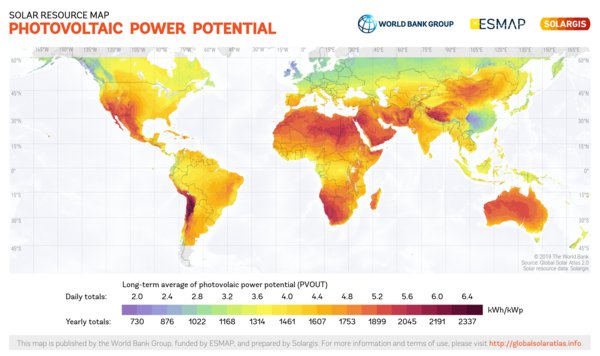
Did you know south africa is one the best countries to produce solar energy?
South Africa receives an average of 2,500 hours of sunshine per year. The average solar-radiation levels range between 4.5 and 6.5kWh/m2 in one day. The annual 24-hour global solar radiation average is about 220 W/m2 for South Africa. This makes South Africa's local resource one of the highest in the world. The use of solar energy is the most readily accessible resource in South Africa. In terms of peak sunlight hours, South Africa receives between 4.2 and 6.2 hours per day, depending on the location. This means that there is a lot of potential for solar power generation in South Africa. The high level of sunlight irradiation in South Africa is due to its location in the southern hemisphere. The southern hemisphere receives more sunlight than the northern hemisphere because the Earth's axis is tilted towards the sun during the southern summer. The high level of sunlight irradiation in South Africa is a major advantage for the country. It means that South Africa has the potential to generate a significant amount of solar power, which could help to reduce the country's reliance on fossil fuel.
About LiFePO4
LiFePO4, or lithium iron phosphate, is a type of lithium-ion battery that is becoming increasingly popular for use in backup battery systems. LiFePO4 batteries have a number of advantages over other types of lithium-ion batteries, including safety. LiFePO4 batteries are less flammable than other types of lithium-ion batteries. This makes them a safer choice for use in backup power systems. LiFePO4 batteries have a long lifespan, typically lasting for 5,000 to 10,000 cycles. This means that they can be used for many years before they need to be replaced. LiFePO4 batteries are very efficient, meaning that they can store a lot of energy in a small space. This makes them a good choice for backup power systems that need to be compact. Backup battery systems are an important part of any home or business that wants to be prepared for a power outage. LiFePO4 batteries are a good choice for backup battery systems because they are safe, long-lasting, and efficient.
common questions
A solar power system is designed to generate electricity from sunlight. It can be connected to the grid, or it can be an off-grid system. A solar and backup power system is a solar power system that also includes a battery storage system. This allows the system to provide power during a power outage.
There are many benefits to having a solar and backup power system. A solar and backup power system can help you to reduce your reliance on the grid. This can save you money on your electricity bill, and it can also give you peace of mind in the event of a power outage. A solar and backup power system can help you to increase your energy independence. You will be less affected by power outages and other disruptions to the grid. Reduce your carbon footprint and your impact on the environment.
The cost of a solar and backup power system can vary depending on the size of the system, the type of batteries that are used, and the location of the system. However, in general, solar and backup power systems can range in price from a few thousand rands to a few hundreds of thousands. Usually we recommend, don't go much bigger than you need to save costs.